Gas Kiln Control System
Automated gas kiln controller: from visualization and flue regulation to a distributed ESP-NOW sensor network, a Modbus HMI architecture, and finally a production-grade Beckhoff PLC.
An ongoing project to automate and instrument the gas kiln at a small ceramic factory. The system evolved through five stages — each one pushing further into the process and adding a new layer of control, safety, or observability.
Stage 1 — Visualization Stack
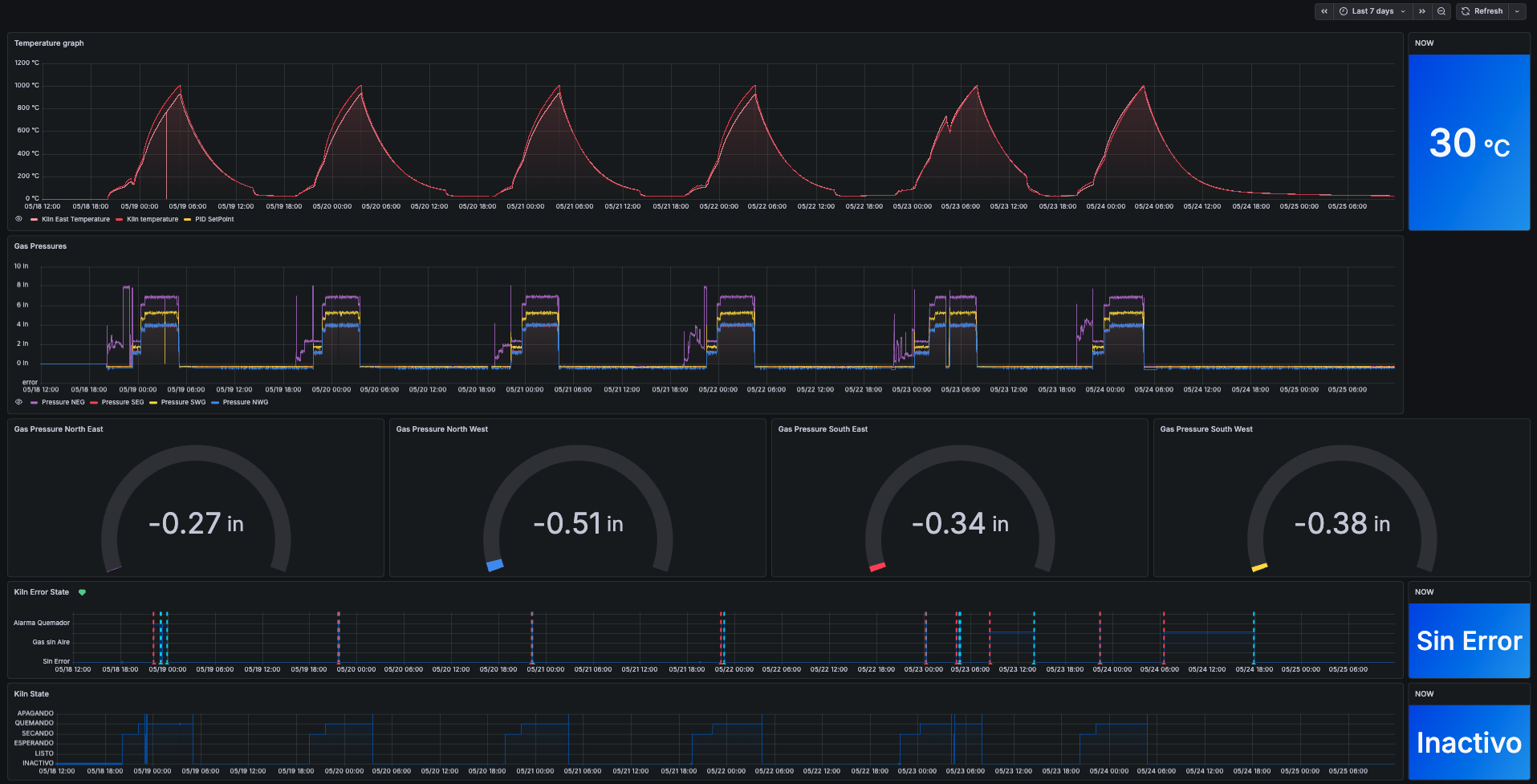
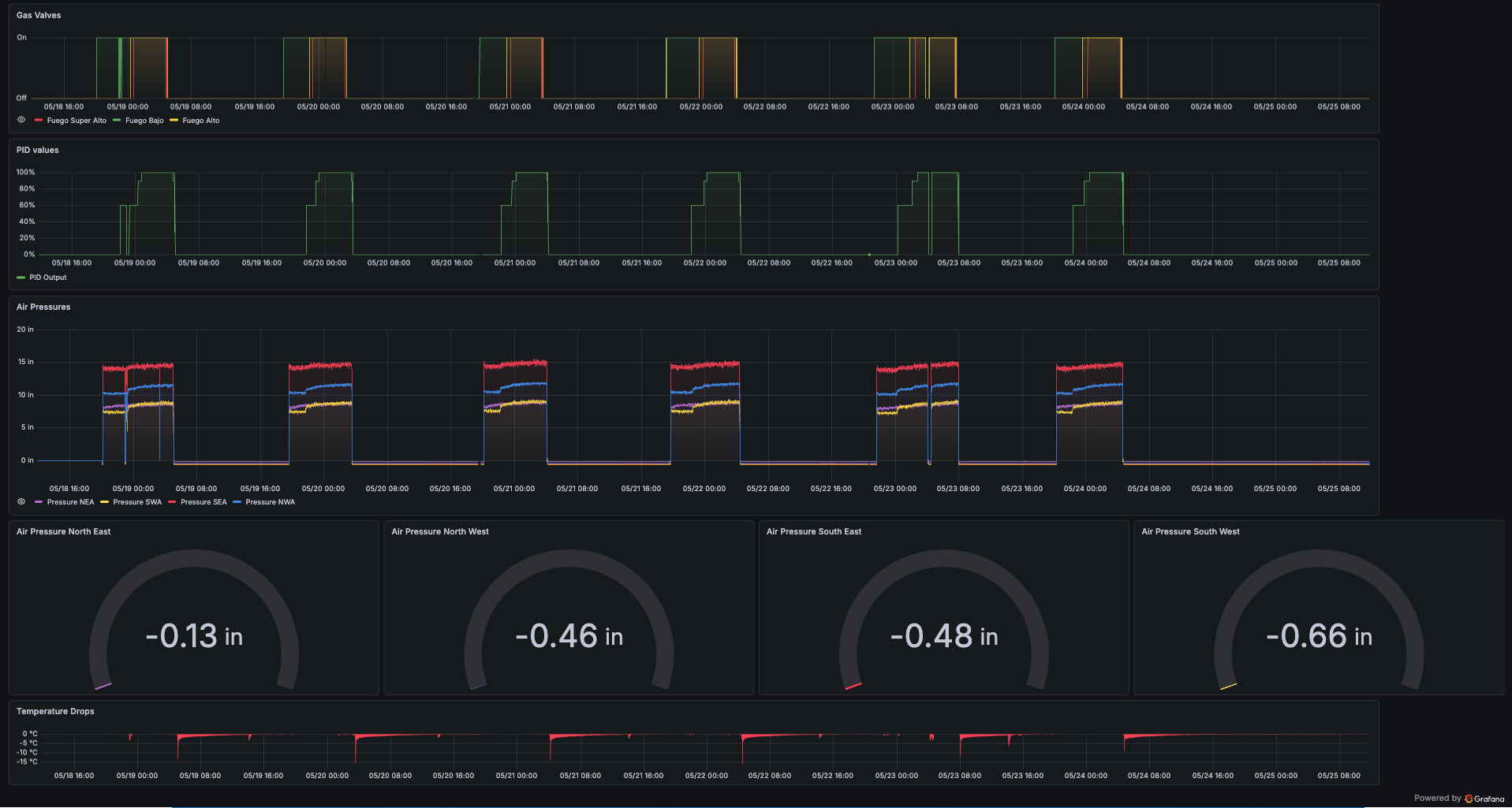
The first step was purely observational: Push kiln instrumentation readings to InfluxDB for real-time Grafana dashboards. Before touching any controls, understanding the kiln's thermal behavior was the priority. This helped identify key areas of opportunity that would later be targets for automation.
Stage 2 — Flue Regulation
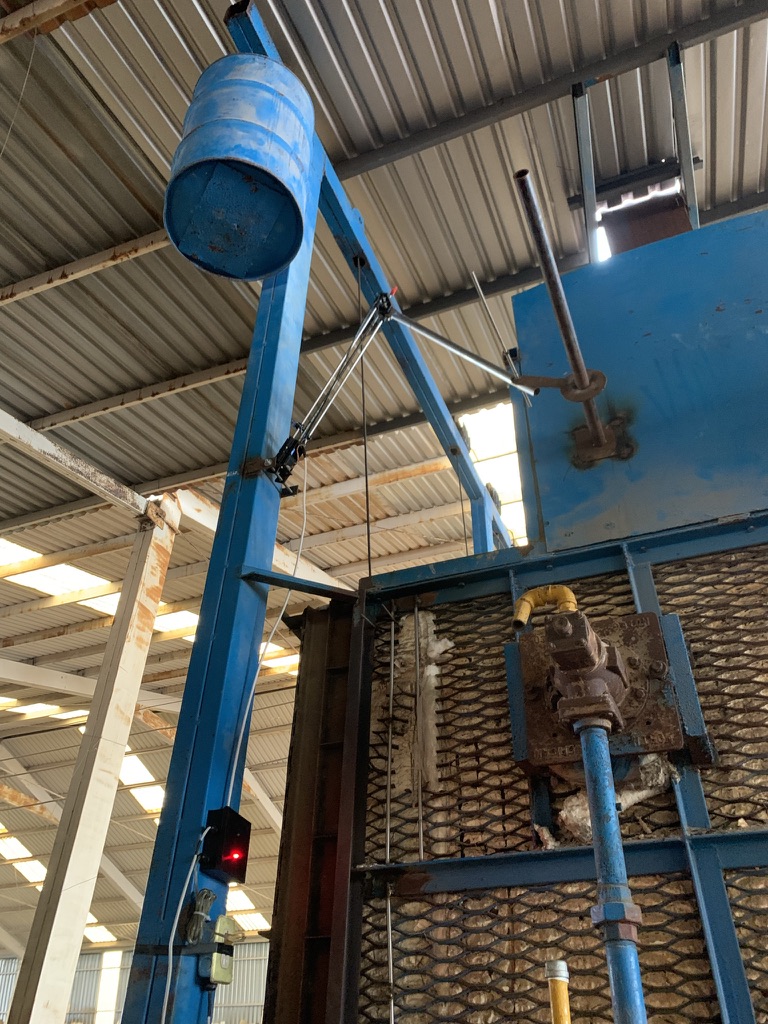
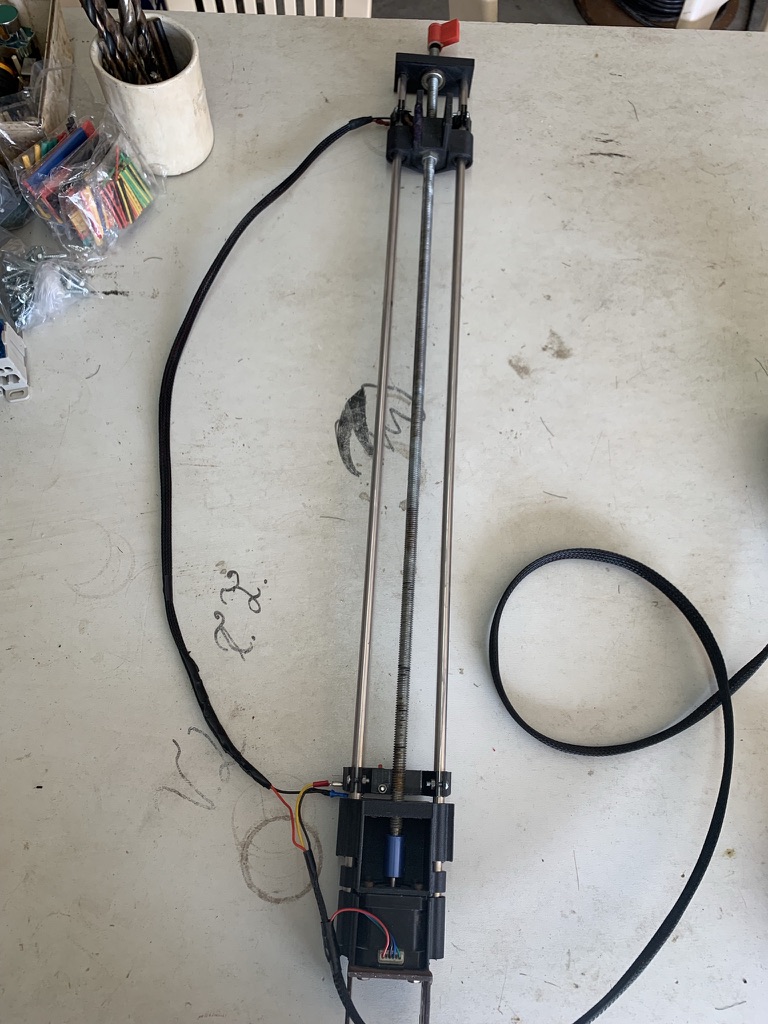
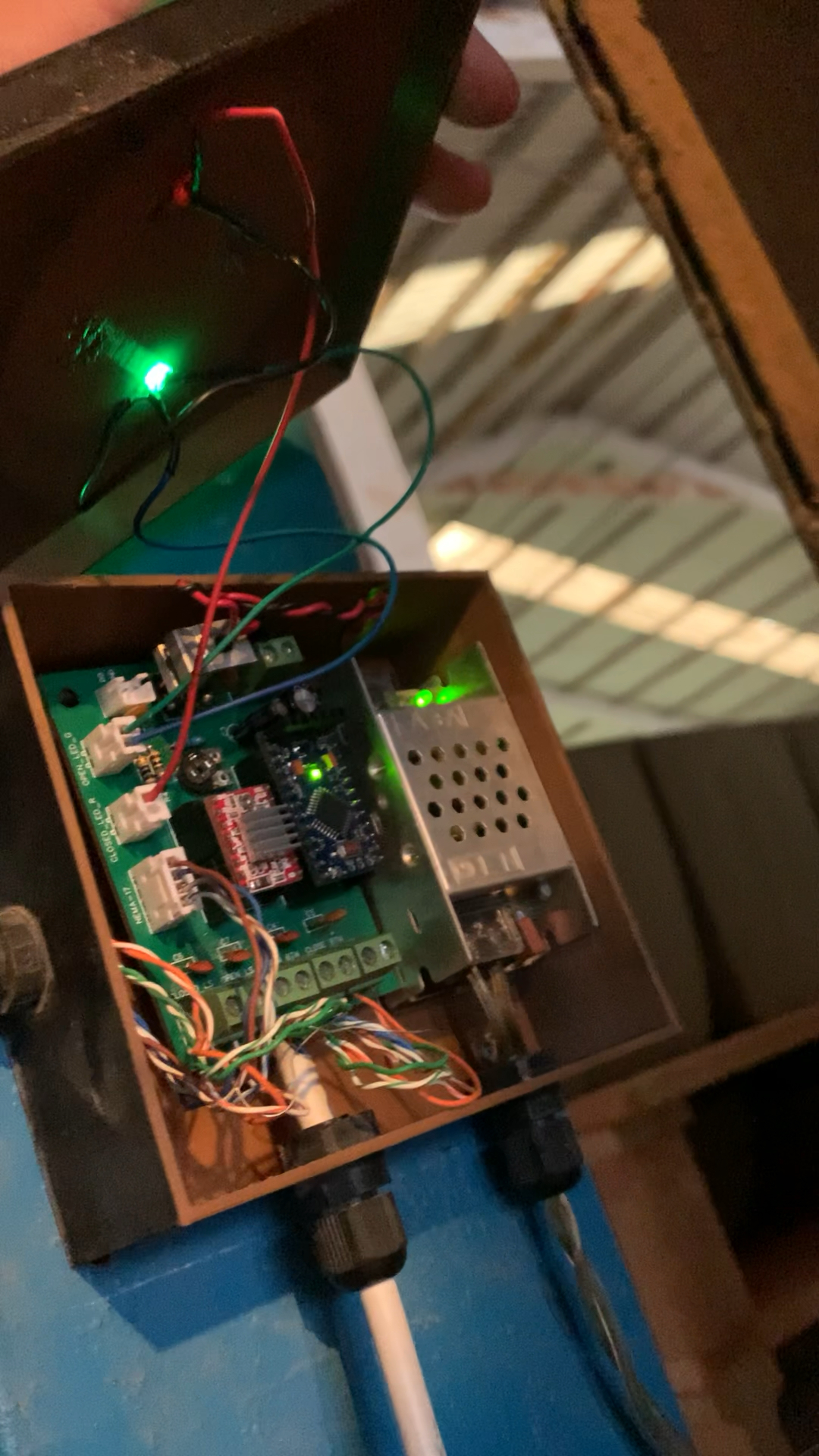
The kiln's flue damper was being adjusted by hand throughout each firing. To automate it, I designed and built a linear actuator controller based on a NEMA17 stepper motor — mechanically coupled to the damper linkage and driven by a dedicated microcontroller board. The actuator responds to setpoints from the main controller, giving the system its first closed-loop output.
Stage 3 — ESP-NOW Sensor Network & Full Control
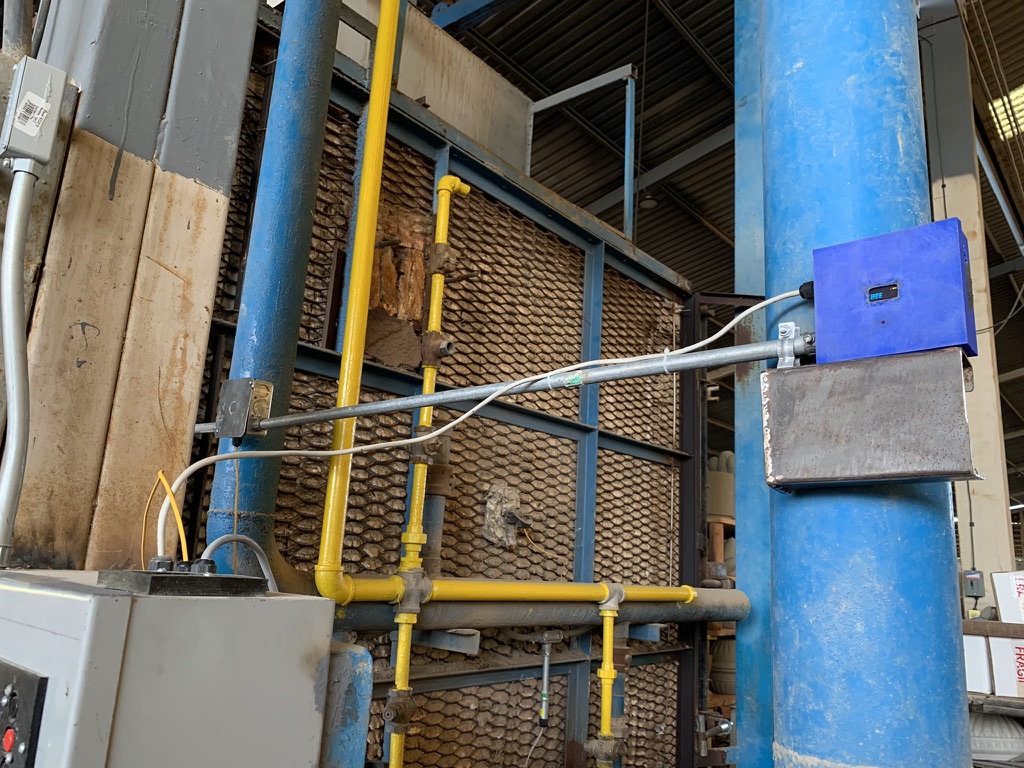
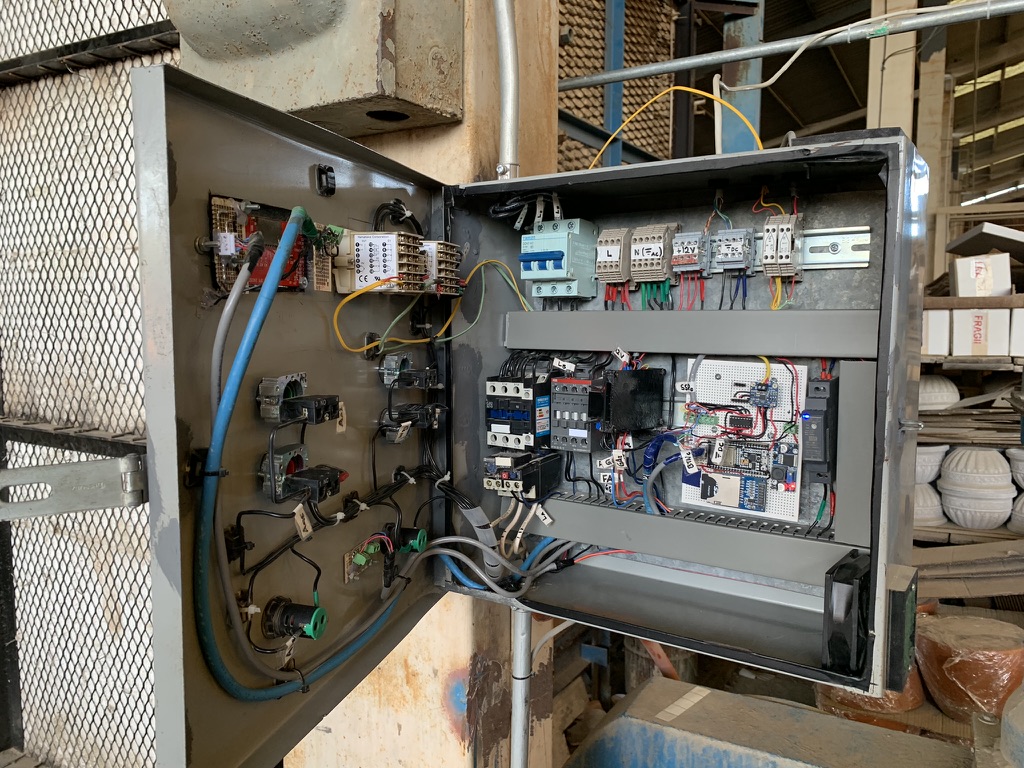
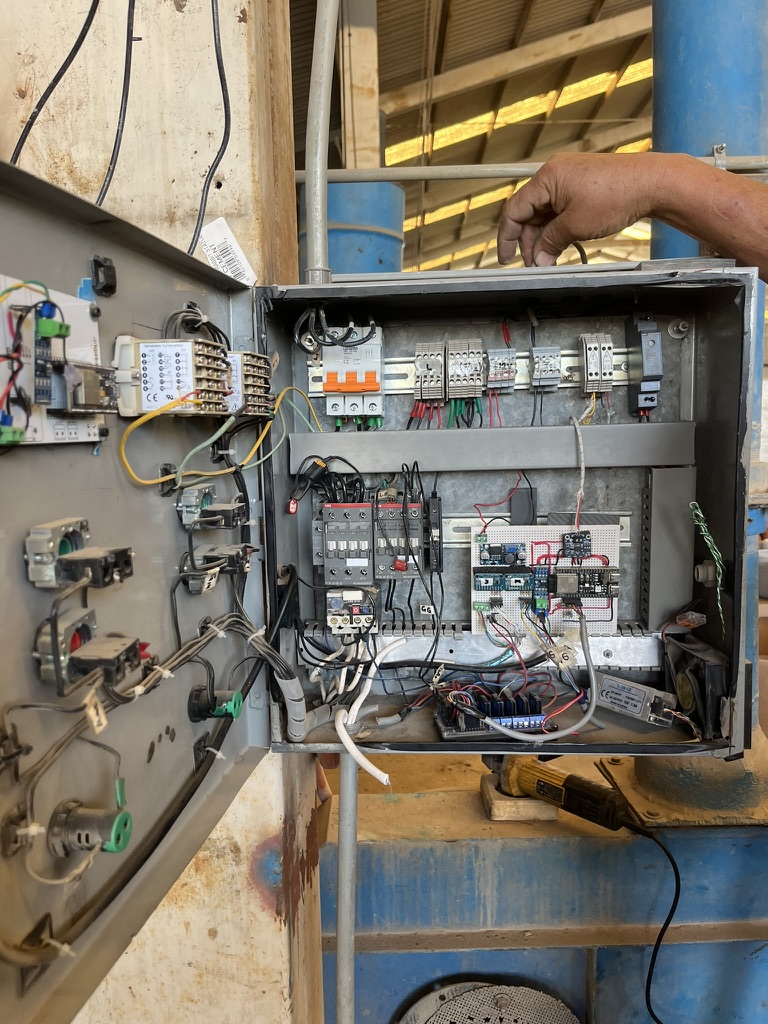
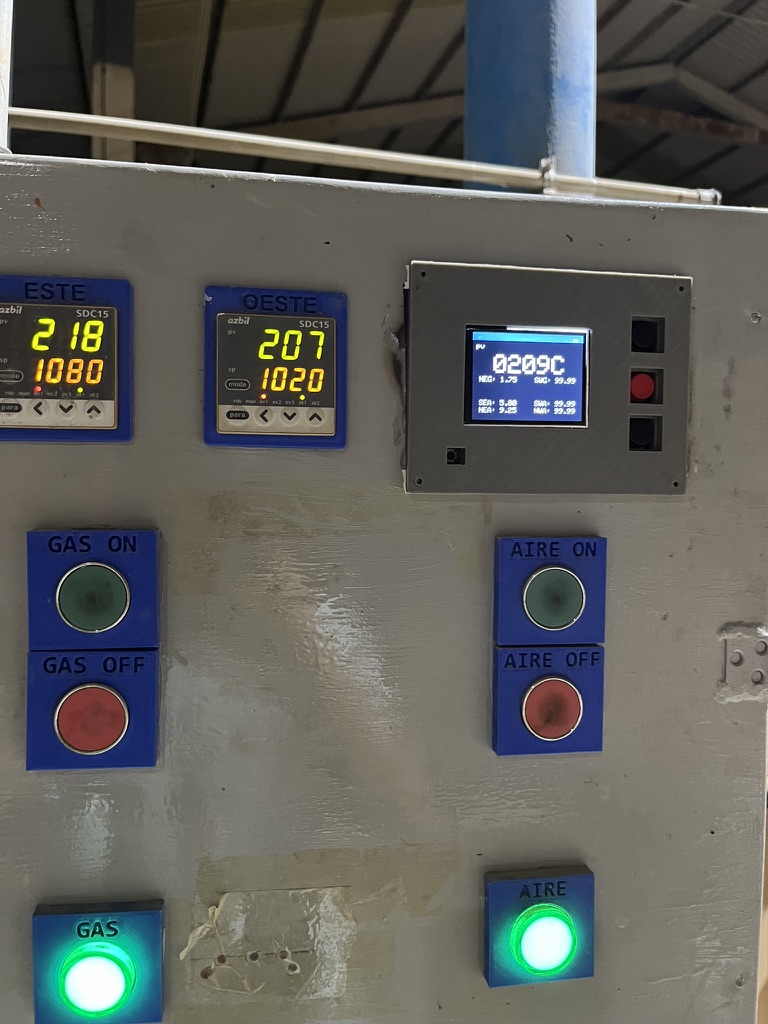
Added more measurement points: additional thermocouples, differential pressure sensors for gas and combustion air. Utilized data-acquisition architecture using ESP-NOW: low-overhead peer-to-peer radio between ESP32 nodes with no router required. Each node handles its own sensors and relays readings to a central controller. The controller handled safety checks, a TFT display as an HMI and the firing programs including PID based control.
Stage 4 — Modbus RTU HMI Architecture
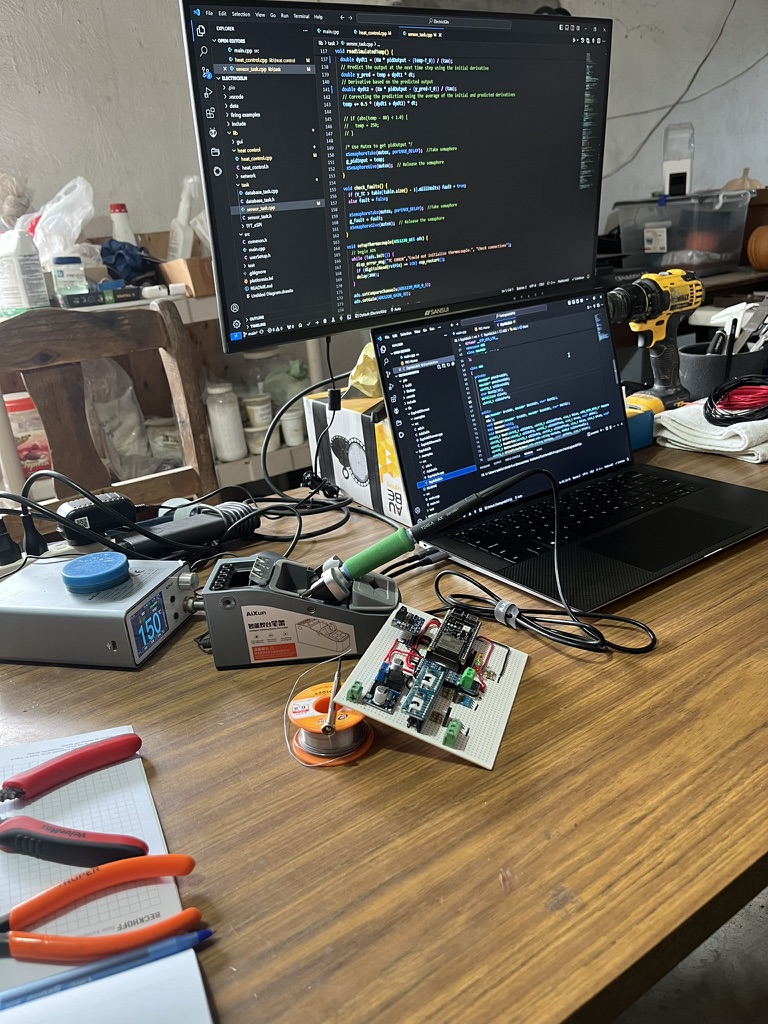
After about a year of operation, occasional TFT screen flicker in the direct-connected panel became a reliability nuisance. I also learned learned that sometimes less is more, and while the esp-now system was elegant, a direct connection to sensors was more appropriate. On returning from a year studying abroad in Munich, I redesigned the architecture: a master/slave split where a dedicated HMI master talks to the kiln controller over Modbus RTU (RS-485). I reused the existing PCB from the ESP32 Kiln Controller project and modified the firmware to operate as the HMI master — keeping the hardware investment while cleanly separating display logic from control logic.
Stage 5 — Beckhoff PLC & Burner Management
After the successful Modbus implementation, I decided to slowly move to a more robust and production-ready solution using a PLC and a certified burner management system. This generation added a Siemens LME burner management unit, a Belimo 4–20 mA proportional valve for gas modulation, and a Beckhoff CP6606 running TwinCAT for recipe management and PID control.
See the full write-up on the Beckhoff Kiln Controller page.